

Where Play Meets Landscape Architecture: The Rise of “Play-Scaping”
Author: Austin Stanfel
Play-scaping is increasingly reshaping the way landscape architecture and childhood play intersect, transforming public and private spaces into environments that foster creativity, wellness, and a deep connection to nature. This article explores the evolution, principles, and future of play-scaping, where landscaping and play design merge to create playful, ecologically sensitive landscapes that go far beyond the standard playground.
What Is Play-Scaping?
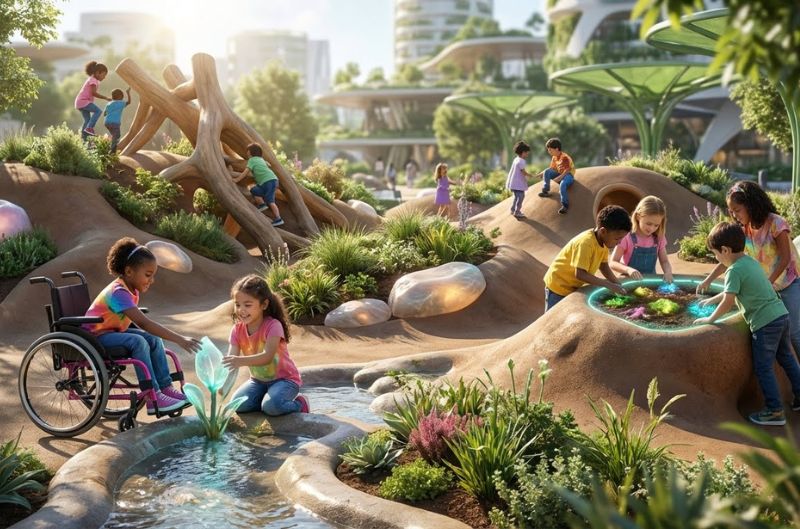
Play-scaping refers to the intentional integration of playful opportunities into the broader landscape, often synthesized by landscape architects in collaboration with play specialists and community members. Unlike traditional playgrounds, which rely heavily on fixed equipment, play-scaping molds earth, plants, water, and bespoke structures into environments that invite open-ended exploration and active engagement for all ages.
Evolution: From Playgrounds to Play-Scapes
Traditional playgrounds originated in the late nineteenth and early twentieth centuries, offering safe, designated spaces filled with swings, slides, and climbing frames. However, critics noted their lack of imagination, repetitive features, and disconnect from natural surroundings. By the mid-twentieth century, visionaries began advocating for play environments that responded to local ecology and offered diverse sensory experiences, leading to the development of adventure playgrounds and nature play zones.
Modern playscapes leverage advances in material technology, design philosophy, and community engagement to create spaces that are more adaptable, inclusive, and visually compelling. Notably, contemporary landscapes prioritize:
- Mounding earth for climbing and rolling.
- Planting native species for sensory, shade, and seasonal interest.
- Integrating water features and natural topography for dynamic play.
- Using sustainable materials in sculptural forms.
Principles of Play-Scaping
Successful play-scaping is rooted in several guiding principles:
- Integration with Nature: Playscapes are designed to feel like natural extensions of their environment. Trees, shrubs, and rocks are not simply decorative; they are play assets, providing shade, tactile exploration, and habitats to discover.
- Variety of Play Styles: Playscapes accommodate active play (running, climbing, sliding), social play (group games, sand pits), quiet play (peaceful nooks or water features), and imaginative play (open-ended spaces for stories).
- Topographical Diversity: Elevation changes, slopes, and undulating terrain encourage richer movement and help children develop motor fitness, balance, and spatial awareness.
- Inclusivity and Accessibility: Modern playscapes embed ADA-compliant pathways and incorporate features that enable children of varying abilities and ages to participate fully, such as sensory gardens, accessible trails, and multilevel play structures.
- Community Context: Designs reflect cultural stories, local materials, and community preferences, deepening stewardship and a sense of belonging.
The Impact of Play-Scaping
Play-scaping supports child development by encouraging risk-taking, resilience, socialization, and environmental stewardship. Its influence stretches beyond childhood: playscapes are inherently multigenerational, positioning play as fundamental to urban life and community wellness. Environmental impacts are also positive, as thoughtful design restores habitats, mitigates urban heat, and encourages sustainable land use.
Challenges and Opportunities
While play-scaping has transformative potential, it also poses design and maintenance challenges. Natural sites may require ongoing restoration, and inclusivity demands thoughtful grading and surfacing for both mobility and sensory use. Community involvement is key, play-scaping must balance imaginative risk with safety, and every site’s ecology, history, and demographic needs inform final designs.
The Future of Play-Scaping
Looking forward, play-scaping will expand as societal priorities shift toward mental health, environmental justice, and urban resilience. With the rise of smart playgrounds, augmented reality, and climate-adaptive components, future playscapes may blend digital and tactile experiences, offering new opportunities for creativity and connection, while always rooting play in the unique DNA of each landscape.
Play-scaping is not just a trend; it is the blueprint for a healthier, more vibrant future for public spaces, where play and landscape architecture partner to reimagine what outdoor life can be.